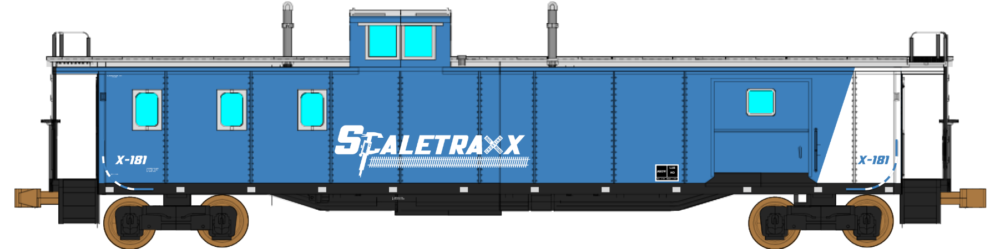


We have been busy, we are always trying to stay ahead, so here’s something brand new in N and HO scale and coming to our amazing line.
With no further ado we present the
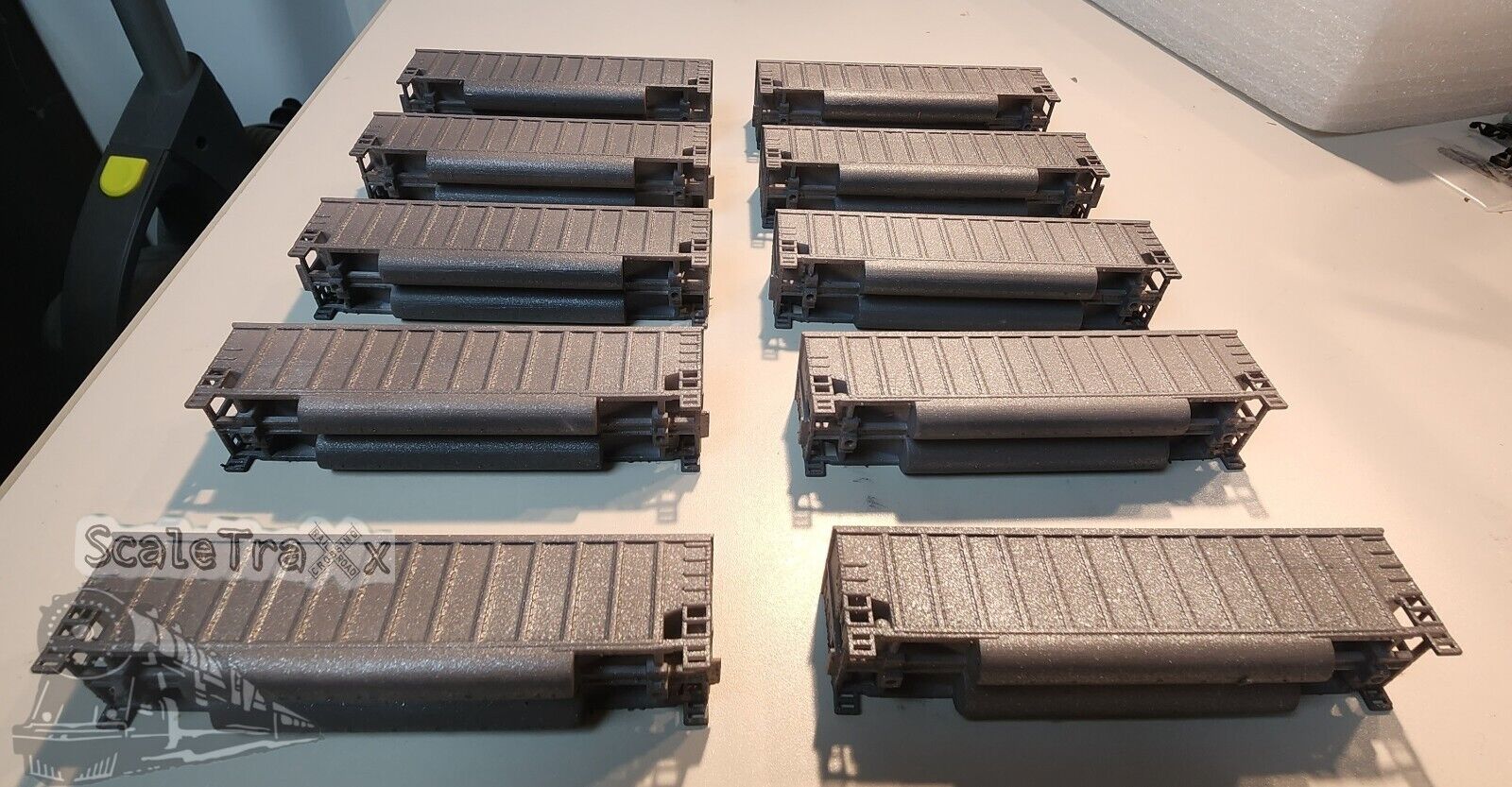
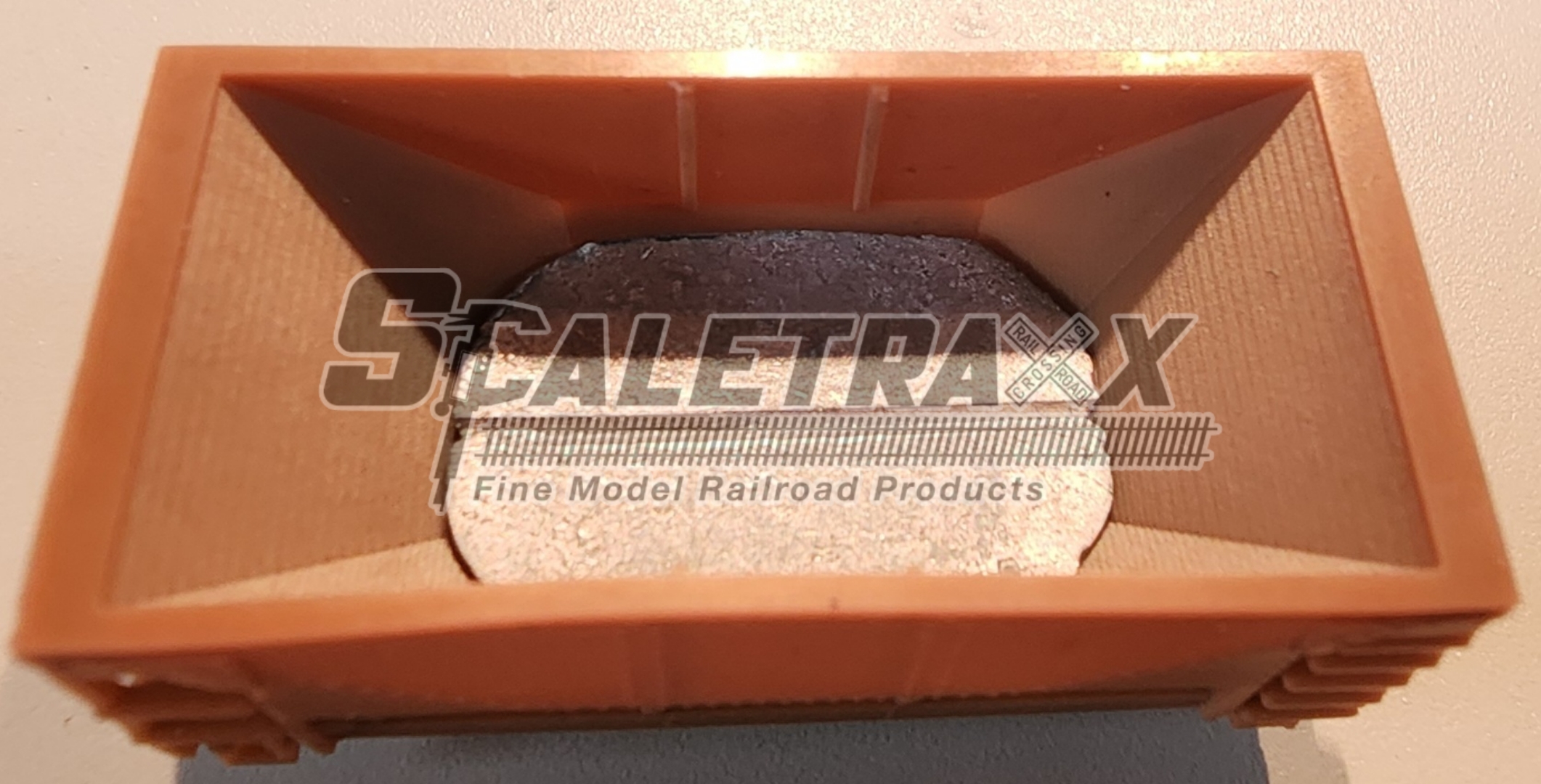
National Steel Car 2,500-Cubic-Foot Aggregate Gondolas (PHASE 1)
5 body’s
They will come with brass stirrups, detail parts and truck pins
TRUCKS AND COUPLERS NOT INCLUDED
Here’s some wonderful information we gathered
Among the many specialized freight cars operating across North America, the National Steel Car (NSC) 2,500-cubic-foot aggregate gondola stands out as one of the most purpose-built designs ever produced for hauling dense bulk commodities.
Unlike conventional gondolas designed for general freight, these compact, high-capacity cars were engineered specifically for transporting crushed stone, gravel, limestone, sand, and railroad ballast.
Their distinctive proportions and rugged construction have made them an essential part of the construction and railroad industries since their introduction in the late 1990s.
Development and Design
National Steel Car developed the 2,500-cubic-foot aggregate gondola to solve a common problem faced by railroads and aggregate producers.
Traditional gondolas measuring 52 to 66 feet in length provide ample interior volume for commodities such as scrap metal, steel products, or pipe.
However, when loaded with extremely dense materials like crushed rock or ballast, those larger cars reach the maximum allowable rail weight long before they are filled.
To eliminate this inefficiency, NSC designed a shorter, deeper gondola that perfectly balanced volume with weight.
Its 2,500-cubic-foot capacity allows the car to be filled almost exactly to the top while reaching the Association of American Railroads (AAR) maximum gross rail load of 286,000 pounds.
This “perfect cube” approach maximized payload efficiency while minimizing wasted interior space, making the design exceptionally economical for hauling heavy aggregates.
Specifications
The NSC aggregate gondola was built to withstand continuous service under demanding conditions.
Key Specifications
Capacity: 2,500 cubic feet
Gross Rail Load (GRL): 286,000 pounds
Lightweight: approximately 50,500 pounds
Load limit: approximately 235,500 pounds
These dimensions make the car one of the most efficient aggregate gondolas ever produced for high-density freight service.
Structural Features
Although simple in appearance, the NSC aggregate gondola incorporates several engineering features designed specifically for the harsh conditions of aggregate transportation.
The heavy box-section top chord reinforces the upper edge of the car, allowing it to withstand repeated impacts from large front-end loaders during loading.
Reinforced side sheets and robust crossbearers distribute the immense weight of crushed stone while resisting fatigue over decades of service.
One of the car’s unique characteristics is its pinned corner construction combined with a fully welded body.
Aggregate unloading often involves powerful vibratory shakers that subject the carbody to tremendous stress.
The pinned corner design allows a small amount of controlled flexibility, reducing stress concentrations and extending the service life of the structure.
Drainage and clean-out openings located near the ends of the car prevent water accumulation and allow stone dust to be removed between loading cycles.
Without these openings, wet aggregate residue could harden into concrete-like deposits that would reduce carrying capacity and complicate maintenance.
Production Phases
Production of the NSC 2,500 aggregate gondola extended from the late 1990s through the mid-2000s, with most cars constructed between 1998 and 2006.
Phase 1 (1998–2002)
The original production cars featured uniform side rib spacing and the first generation of NSC’s reinforced body design.
Major customers during this period included Union Pacific, Vulcan Materials, and the first Martin Marietta fleets.
Service History
The NSC aggregate gondola quickly became a common sight throughout North America, serving both Class I railroads and private aggregate companies.
Railroads primarily use these cars in maintenance-of-way service, transporting ballast from quarries to track renewal projects.
Their compact dimensions and high weight capacity make them ideal for delivering crushed stone directly to work sites.
Private companies employ the cars in dedicated unit trains that shuttle continuously between quarries and concrete plants, asphalt facilities, and construction distribution centers.
These trains often operate on fixed routes, moving thousands of tons of aggregate every day.
Owners and Reporting Marks
Over the years, the NSC 2,500 aggregate gondola has appeared under numerous railroad and private reporting marks.
Class I Railroads
Union Pacific (UP): 94100–94449
Chicago & North Western / C&NW (CMO): 396300–396579
Private Owners and Leasing Companies
Martin Marietta Materials (MWAX): 3001–3145 and 3201–3335
Vulcan Materials (VULX): 5301–5600
LGEX: 2201–2275
GMQX: 1–105
These fleets remain among the most recognizable aggregate gondolas operating today.
Commodities Hauled
The NSC 2,500 gondola was designed exclusively for dense, heavy bulk commodities, including:
Railroad ballast
Crushed stone
Gravel
Limestone
Construction sand
Riprap
Large erosion-control rock
Because these materials have exceptionally high weight-to-volume ratios, the gondola’s dimensions allow it to reach its legal weight limit just as it reaches full capacity.
Attempting to use these cars for lighter commodities such as woodchips or coal would waste their carrying potential, while loading a conventional long gondola with solid stone would exceed allowable axle loads before the car was full.
Current Operations
Today, most NSC 2,500 aggregate gondolas remain in active revenue service. Since freight cars generally have an interchange life of up to 50 years under AAR rules, these fleets are now entering their middle years and continue to perform the jobs they were originally designed for.
Private fleets frequently change ownership or lease arrangements as construction demand shifts throughout North America.
Cars originally built for one company may now operate under different reporting marks after being acquired by leasing firms or aggregate producers.
Union Pacific continues to use its fleet primarily in ballast and maintenance-of-way service, with cars dispersed across the railroad rather than operating in dedicated trains.
Former Chicago & North Western cars also remain active throughout the Upper Midwest under Union Pacific ownership.
Many cars have undergone extensive rebuilding over the years.
Damaged side sheets, dented top chords, and worn floors have been repaired or replaced, while numerous examples now display patched reporting marks reflecting changes in ownership or leasing arrangements.
Legacy
The National Steel Car 2,500-cubic-foot aggregate gondola represents one of the most efficient freight car designs developed for heavy bulk transportation.
By matching interior volume to legal weight limits, NSC created a gondola capable of maximizing payload while minimizing wasted space.
More than two decades after the first cars entered service, these rugged “shorty” aggregate gondolas continue hauling the stone, gravel, and ballast that form the foundation of North America’s railroads, highways, and infrastructure, making them an indispensable component of modern freight transportation.
More things still to come
THANK YOU FOR YOUR SUPPORT


Reviews
There are no reviews yet.